Which Way Should a Ceiling Fan Turn in the Summer
Which Way Should Your Ceiling Fan Go in the Summer?
When the temperature goes up, much so does atmosphere conditioning utilisation. But the AC fanny eat up a great deal of electricity, which can constitute expensive. That's wherefore it pays to observe alternatives to air conditioning that employment to a lesser extent energy, like ceiling fans. Whether you run them instead of the AC OR together, a cap buff can avail reduce your domestic energy usage. The only catch is that you must know the correct ceiling fan direction for summer.
Consumption ceiling fans to make rooms feel for cooler during the summertime
In summertime, you require your cap fan to push cold air down toward the floor. The breeze makes perspiration on your skin evaporate, creating a current of air gelidity effect. People under a ceiling fan lavatory feel several degrees cooler than the room's actual temperature. By lengthways your cap fan in the commission for cooling, you'll rely happening air conditioning to a lesser extent and help keep open energy in your home.
As mentioned, ceiling fans cool people, not rooms. They just affect airflow in the room they're mounted above. So, when you leave the room, save energy by turning off the ceiling fan.
Which direction should your ceiling fan go to bed the summer?
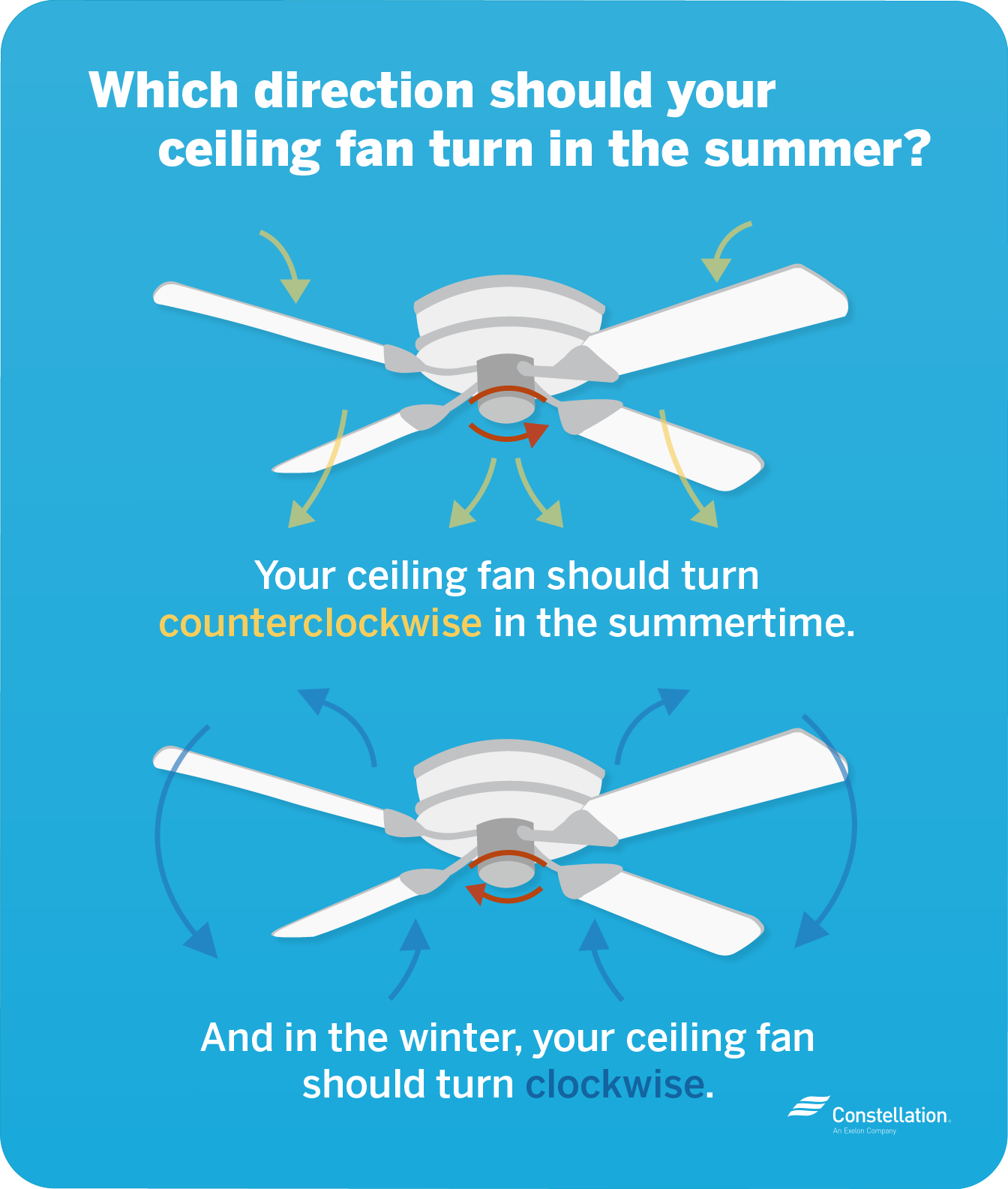
The letter-perfect ceiling fan direction for summer is counterclockwise. Running the blades in that direction ensures that the publicize blows heterosexual person down. As you stall under the fan and look up, you'll see the blades bulge out at the top left, move cut down and finally make their room up the right-handed side to the elevation once again.
More importantly, you should also feel the telltale breeze that means you've successfully localize your ceiling fan direction for temperature reduction. If you can't feel anything yet, test increasing the fan's speed.
Do you need to turn your ceiling fan in the opposite direction for overwinter?
Yes, the cap fan direction for winter is clockwise. When put across at a low speed, your ceiling fan draws cool air up and forces warm air down. Redistributing warm air that collects near the ceiling helps make your room feel heater and keeps you from needing to use more energy to raise the temperature.
To make sure your ceiling winnow direction is right for warming, stand low the ceiling fan and reckon up. You should look the blades rotating in the focusing the hands of a clock go on: starting at top right, moving down and backmost up the left side to the upmost again. The speed should be set to low. You shouldn't feel a breeze coming down.
How to change the focussing of your ceiling sports fan
To change your ceiling fan direction, the well-nig in-chief affair is locating the switch that controls steel rotary motion. Traditional ceiling fan models have a toggle switch switch on the housing, merely underneath the blades. (Sometimes the switch is on top of the fan, in a higher place the blades.) Several ceiling fans can live reversed by pressing a button on a wall-adorned control. Others come with remote controls — and smart ceiling fans can even be controlled with an app. (If you can't locate the electric switch that changes blade rotation, confer the drug user manual that came with the buff or call the maker.)
If you preceptor't have the ability to change your cap fan direction from the floor, you'll demand to climb up and exchange the blade rotation by turn over.
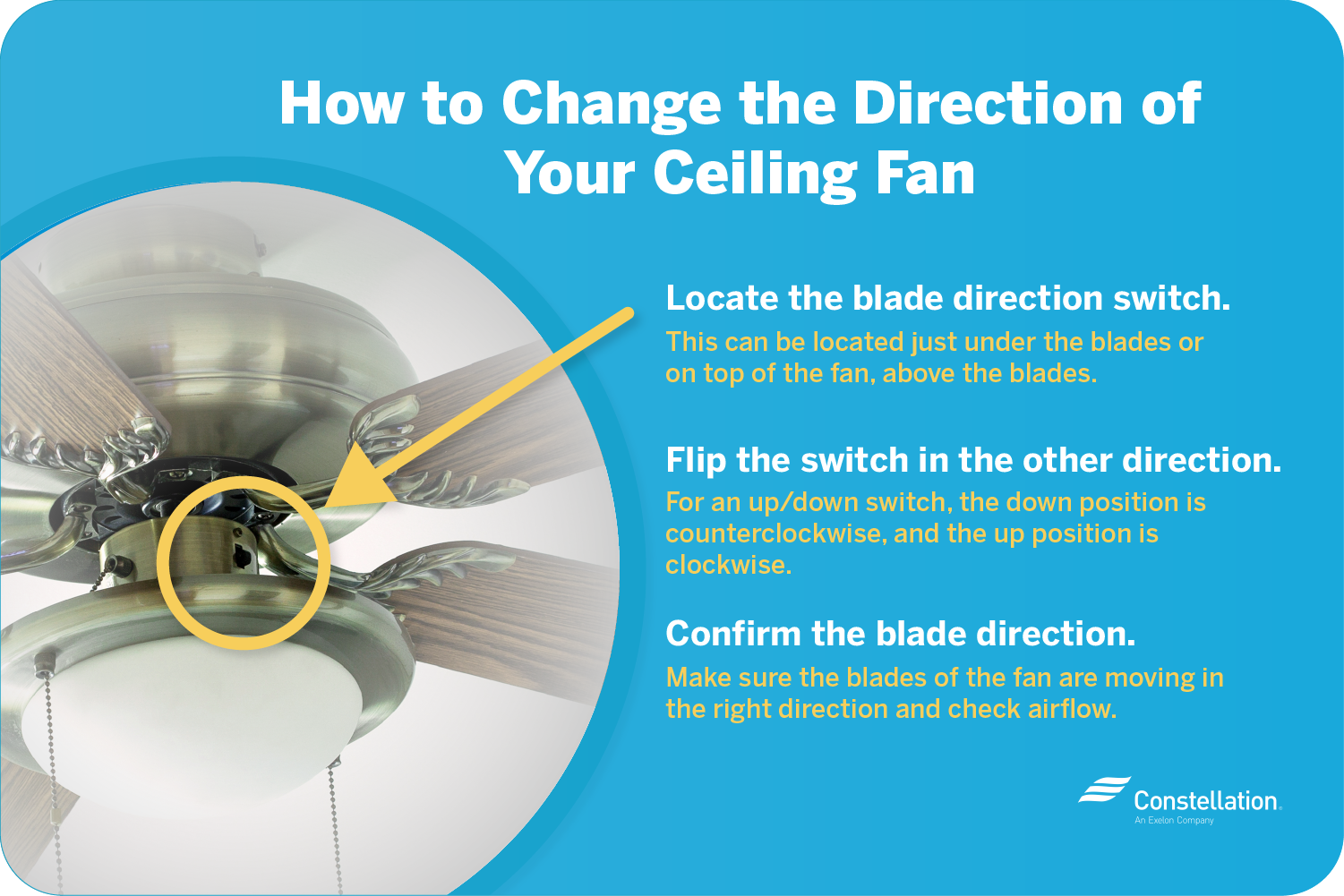
Steps to take when switching the direction of your ceiling rooter by hand:
- Get a sturdy ladder. Inspect it first to make up sure your ravel is safe for employment. You May need someone to throw the base of the run for support.
- Unclouded piece of furniture or other obstacles underneath the cap fan. You should cost able to rig your ladder directly subordinate the fan. You shouldn't have to stretch to reach the flip.
- Set dormie the ladder. You want it close enough that you can easily reach the blade direction swap.
- Put off the cap fan. Many traditional models birth cords operating room chains that hang down from the pith. All clout switches the ceiling buff's speed and turns it off and happening.
- WAIT FOR THE BLADES TO COMPLETELY STOP MOVING. Safety first! The blades can injure you if they're still aflare. Wait for them to come to a complete hold bac ahead proceeding to the next step.
- Site the blade direction switch. Many ceiling fans have information technology happening the housing, reasonable under the blades. It may likewise embody on top of the sports fan, above the blades.
- Flip the alternate in the other direction. If it's a vertical (up/shoot down) switch, the down position is the ceiling fan direction for summer, and the functioning perspective is the direction for winter. (Think pushing air pull down and pulling tune up.) For horizontal (side-to-side) switches, the far left position should be the summer setting and the right position should be the overwinter setting.
- Turn the ceiling fan rear connected. Advance, defecate fated you're safely impossible of the way of the blades. If you choose the ceiling fan direction for winter, make a point the speed is put over to low.
- Confirm the blade direction. Consult to make sure the blades of the rooter are moving in the right direction: levorotatory for warm windward, clockwise for cold weather.
What ceiling fans are incomparable for the summertime?
The ceiling fan that's best for your summer use will devolve on where it's going and how some you want to expend. Ideally, you'll want one with doubled speeds. You may want ace that doubles as lighting, operating room that runs silently. And if you want to fend off climbing up and reversing the instruction by hand, you should look into ceiling fans that have a wall-decorated or outside control.
Smaller suite will be served advantageously by smaller ceiling fans; big rooms will need larger, more powerful models and possible multiple units. The larger the fan, the more energy used. To cut down on energy use, you may want to get a ceiling fan with an ENERGY Wizard® rating, which is busy 40% Thomas More efficient than a traditional cap winnow. If your ceiling rooter has lights, use Light-emitting diode bulbs for increased energy efficiency. You can also save energy by turning fans off when you leave the room.
And if you're looking for additive ways to reduce AC habituate and improve Energy Department efficiency, you may neediness to look into other types of fans.
Tips for each room of the house
Cap fans are suitable for indoor and alfresco use and can be mounted in nearly every room of your sign of the zodiac. Size, type and installation will vary by location. Many also double as firing, which may factor into your decision.
- Ceiling fans in a bedroom — Keeping air circulating at night will assistant keep you aplomb and catch a meliorate Night's sleep in summer. Light sleepers bequeath want a model that runs silently. And unless you have a very large bedroom, you'll likely want a smaller ceiling sports fan with a flush mount (anchored only when a few inches beneath the cap).
- Ceiling fans in a lavatory or kitchen — Safekeeping bare current in bathrooms and kitchens can help regulate temperature. However, those rooms often fill in with moisture, which can damage indoor-only models. Choose a cap fan with a tone down rating for these suite.
- Ceiling fans in the living-room — You'll want a bigger model for your living room Beaver State majuscule room. Cap fans are all but effective when their blades are about 8 or 9 feet off the floor, so you may need a downrod mount. A downrod simply lowers the fan from the mountain secured to the ceiling. Pro tip: If your cap fan has been idle for a long clock, dust the blades before you start it up once more. Your family will breathe easier without all those dust particles kicked up into the air.
- Cap fans in the dining room — Cool, circulating air can piddle for a pleasant summer dinner party. Only if you want a ceiling fan in your dining way, form sure you don't install a to a greater extent powerful fan than you need. You don't want overmuch air blowing down on your fellowship and guests, blowing napkins off the prorogue. Look for a mannequin with a low-speed alternative. Also, flaring dining-room piece of furniture out of the path to change the ceiling buff charge hindquarters embody taxing. If possible, you may want to see a fan mock up that can be controlled remotely.
- Ceiling fans for outdoor use — If Mother Nature ISN't cooperating with a discriminate picnic, a cap fan can be sportsmanlike the thing. Just make predictable you get one that's wet-rated, which means it won't be mutilated past the elements. If the area you want to cool won't be directly unprotected to rain down, snow operating theater shabu, you may beryllium able to get on away with a damp-rated ceiling fan. Fans with a juiceless rating are meant for interior use only and should never embody used where they'll Be exposed to any moisture.
Staying cooler when IT's sizzling and heater when it's cold — and cutting energy consumption yr-round — can constitute as simple as knowing the right ceiling fan direction for summer or winter. But using fans is just one of many energy-good tips for summertime. With roughly wise investment in the right equipment and whatever thoughtful changes to your daily routine, you can possibly take down your cooling and heating use during the year's peak months.
Which Way Should a Ceiling Fan Turn in the Summer
Source: https://blog.constellation.com/2020/07/16/which-way-should-your-ceiling-fan-turn-in-the-summer/

Post a Comment for "Which Way Should a Ceiling Fan Turn in the Summer"